


Ballet Supports Imaginative Play in Children
Ballet is more than a physical activity for children—it is also a powerful outlet for creativity. Through movement, storytelling, and music, ballet allows young dancers to explore their imagination while developing coordination and confidence. When children engage in ballet classes, they naturally combine movement with creative thinking, transforming simple steps into magical stories and expressive play.
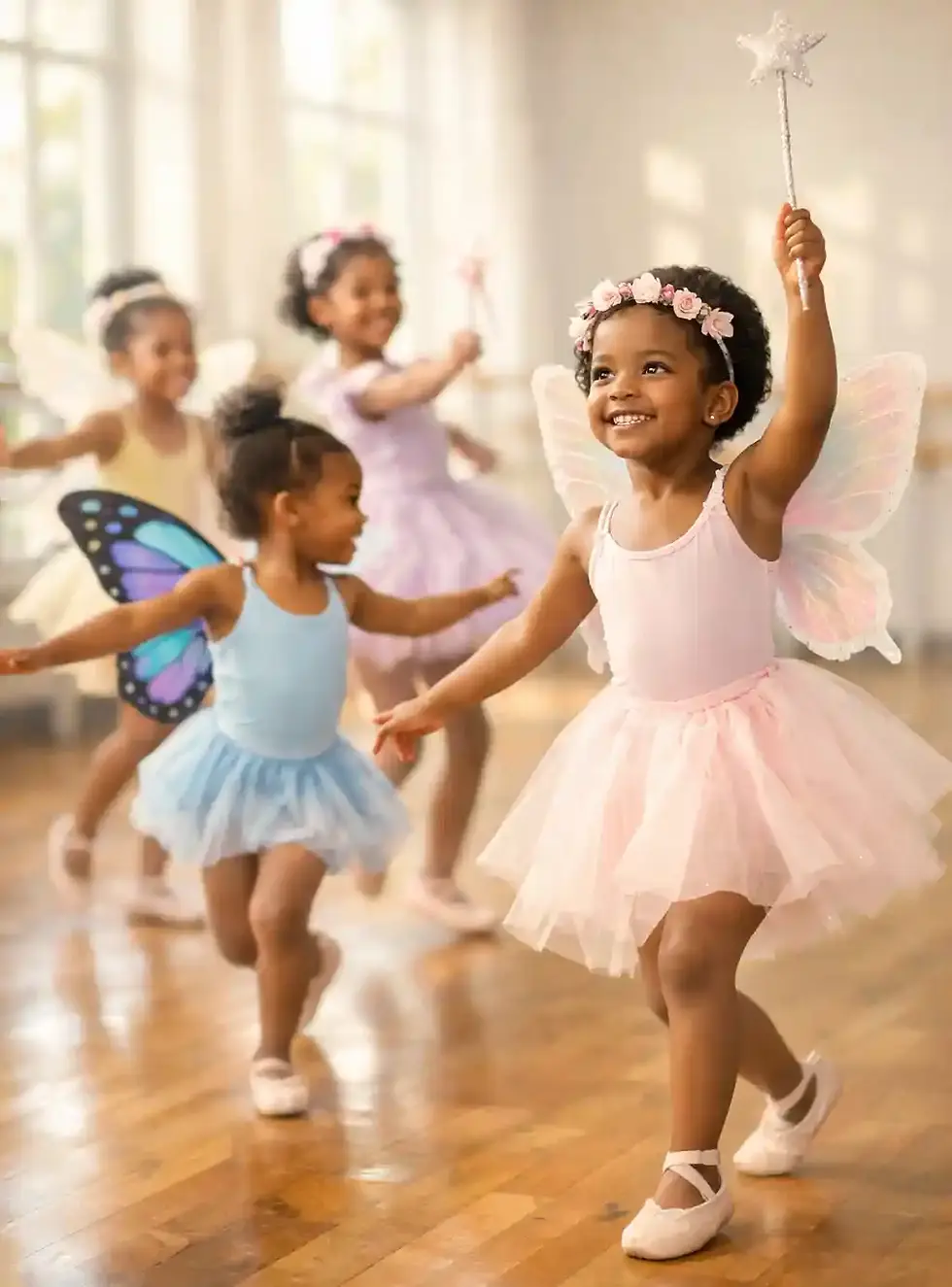
How Ballet Supports Imaginative Play in Children
Children naturally learn through play, and ballet blends movement with imagination in a meaningful way. As students practice ballet, they are encouraged to visualize characters, stories, and emotions through their movements. Because of this, ballet becomes both a physical and creative experience.
According to research from the National Dance Education Organization, dance education strengthens creative thinking and expressive skills in young learners. Source: https://www.ndeo.org
In addition, early dance training can support cognitive and emotional development, helping children express themselves confidently through movement.
Encouraging Storytelling Through Movement
One of the ways ballet supports imaginative play in children is through storytelling. Many ballet exercises encourage dancers to imagine scenarios while performing movements.
For example, children may pretend to:
Float like a feather
Leap like a playful animal
Move gracefully like a fairy
These playful images help children connect emotions and movement. As a result, learning ballet becomes engaging and memorable.
Parents can explore beginner ballet programs that encourage creative movement through classes offered by Inez Patricia School of Dance https://www.inezpatriciadance.com/
Building Creativity Through Ballet Exercises
Ballet teachers often design activities that combine technique with imaginative play. Instead of focusing only on steps, instructors introduce fun imagery to guide movements.
For instance:
Arms may become butterfly wings.
Jumps can represent hopping through a magical forest.
Turns may feel like spinning in the wind.
Because these images spark creativity, children stay engaged and excited during class. At the same time, they develop fundamental ballet skills.
Strengthening Emotional Expression
Another reason ballet supports imaginative play in children is its focus on expression. Ballet encourages dancers to show feelings through their movements.
Children learn to express:
Joy
Curiosity
Confidence
Calmness
When children explore emotions through dance, they develop stronger self-awareness. This process supports both emotional growth and creative confidence.
For additional information on the benefits of dance for children, visit Dance/USA: https://www.danceusa.org
Improving Focus While Having Fun
Imaginative play in ballet is not only entertaining—it also improves concentration. When children visualize characters or stories, they become more focused on their movements.
As a result, students often:
Remember steps more easily
Stay attentive throughout class
Develop stronger body awareness
These benefits help children enjoy ballet while building valuable learning skills.
Creating a Positive Learning Environment
Ballet classes that encourage imagination create a welcoming and supportive atmosphere. Children feel comfortable experimenting with movement and expressing themselves.
Teachers play an important role in guiding this creative exploration. By combining structure with imagination, they allow students to develop both discipline and creativity.
Programs like those offered at Inez Patricia School of Dance https://www.inezpatriciadance.com/provide structured ballet training while supporting the natural creativity of young dancers.
Conclusion
Ballet offers children far more than physical training. It opens the door to creativity, storytelling, and emotional expression. Through imaginative exercises and playful movement, young dancers learn to transform simple steps into meaningful stories.
Because ballet supports imaginative play in children, it helps nurture creativity while building coordination, focus, and confidence. As children dance, they not only learn technique but also discover the joy of expressing their imagination through movement.


Comments