


Basic Contemporary Dance Positions Every Beginner Should Master
Starting your journey in contemporary dance begins with understanding movement foundations. Before learning choreography, turns, or floor work, dancers need to develop body awareness, balance, alignment, and control through basic contemporary dance positions.
These positions create the technical foundation needed for expressive movement. Whether you are taking your first dance class or building stronger technique, mastering these positions will support your growth in contemporary dance.
For dancers looking for professional training, explore Inez Patricia School of Dance for structured dance programs.
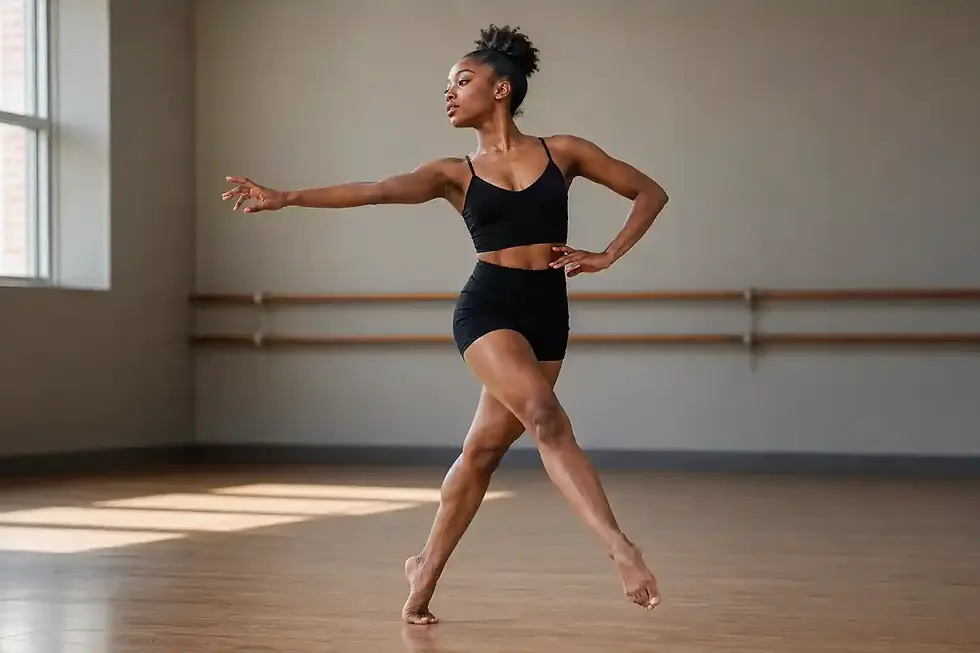
Why Basic Contemporary Dance Positions Matter
Unlike some dance styles that focus only on strict shapes, contemporary dance combines technique, emotion, breath, and natural movement. Learning basic contemporary dance positions helps dancers:
Build proper alignment
Improve balance and body control
Develop fluid transitions
Strengthen core stability
Prepare for choreography and improvisation
Because contemporary dance emphasizes body awareness, each position teaches dancers how to connect movement with expression.
1. Parallel First Position in Contemporary Dance
The parallel first position is often the first stance taught in contemporary dance.
How to perform it:
Place your feet hip-width apart
Keep your toes facing forward
Relax your shoulders
Engage your core muscles
Lengthen your spine
This position creates body awareness and establishes strong posture for movement phrases.
2. Second Position for Grounded Movement
Second position widens your base and develops stability.
To practice:
Step your feet wider than hip-width
Keep your knees soft
Maintain even weight distribution
This position is commonly used for traveling phrases, jumps, and dynamic movement sequences.
3. Lunge Position for Dynamic Transitions
The lunge builds strength and movement control.
Key points:
Bend one knee deeply
Extend the back leg
Keep the torso lifted
Control your center of gravity
Dancers use lunges to transition smoothly between standing movement and floor work.
4. Contraction Position in Contemporary Dance
A contraction involves curving the spine inward while engaging the abdominal muscles.
This position helps dancers:
Express emotion through movement
Develop core strength
Understand breath-based movement
Contractions are strongly influenced by techniques developed by Martha Graham.
For more about Graham technique, visit Martha Graham Dance Company.
5. Release Position for Flow and Expansion
The release position is the opposite of contraction.
Focus on:
Opening the chest
Expanding the ribcage
Lengthening through the spine
Moving with breath
This creates fluidity and emotional openness in contemporary dance.
Tips for Practicing Basic Contemporary Dance Positions
To improve faster:
Practice in front of a mirror
Warm up before movement training
Focus on breath and posture
Move slowly before adding speed
Train consistently each week
Professional instruction also helps dancers avoid incorrect movement habits.
If you want structured classes, explore Inez Patricia School of Dance Programs.
Final Thoughts on Basic Contemporary Dance Positions
Learning basic contemporary dance positions builds the foundation for expressive, technical, and confident dancing. Each position strengthens your control, improves movement quality, and prepares you for choreography.
As your technique develops, these positions become natural tools for artistic expression in contemporary dance.
For broader contemporary dance education, visit Dance Magazine and The Martha Graham Dance Company.


Comments