


Dance Confidence Tips with Horton Technique Modern Dance
Confidence can transform the way a dancer moves.
A confident dancer does not simply perform bigger movements. Instead, they understand their body, trust their preparation, respond to corrections, and commit to each movement with purpose.

For dancers studying Horton Technique Modern Dance, confidence often develops alongside stronger technique. Horton training challenges dancers to improve strength, flexibility, alignment, coordination, and full-body awareness. The technique was developed by Lester Horton and remains an influential codified modern dance system. Ailey Pressroom
At Inez Patricia School of Dance, dancers can use structured training to become more comfortable with movement while developing their individual artistry.
These Dance Confidence Tips with Horton Technique Modern Dance can help dancers approach class, rehearsal, and performance with greater focus and assurance.
1. Build Confidence Through Strong Technique
Confidence becomes easier when you understand what your body is supposed to do.
When dancers feel uncertain about alignment, timing, balance, or choreography, they may hesitate. That hesitation can make movements appear smaller or less intentional.
Horton Technique Modern Dance gives dancers a structured way to strengthen those foundations. Training emphasizes qualities such as strength, flexibility, clean lines, coordination, and organized movement. Ailey Pressroom
Instead of trying to appear confident, focus first on performing each movement correctly.
Pay attention to your:
Posture and alignment
Supporting leg
Core engagement
Shoulder placement
Arm pathways
Weight transfers
Direction of movement
As these details become more familiar, dancers can move with greater certainty.
2. Stop Expecting Every Movement to Be Perfect
Perfection can quickly reduce confidence.
A dancer who worries about making one mistake may become tense before the movement even begins. As a result, the body can lose freedom and natural expression.
Instead, treat mistakes as information.
If you lose your balance, identify what changed. If a combination feels rushed, review the timing. If an extension lacks control, examine your supporting side.
This approach turns mistakes into opportunities for improvement.
Furthermore, dancers who become comfortable making corrections often learn more efficiently because they remain engaged instead of becoming discouraged.
3. Use Repetition to Build Movement Confidence
Repetition creates familiarity.
A complicated combination may feel overwhelming the first time. However, repeating it carefully helps the brain and body recognize the movement sequence.
Start slowly when necessary.
First, understand the order of the movements. Next, refine alignment and weight changes. Then add musicality, dynamics, and expression.
Eventually, the choreography requires less conscious thought.
That allows the dancer to concentrate on performance quality rather than remembering what comes next.
IPSOD's article on Building Dance Precision with Horton Technique Modern Dance also explores how repetition, alignment, timing, and movement awareness contribute to clearer execution. Building Dance Precision: Horton Technique Modern Dance
4. Develop Confident Horton Technique Modern Dance Posture
Your posture can influence how a movement feels and how an audience perceives it.
Confidence does not require exaggerated poses.
Instead, strong placement can create a naturally assured appearance.
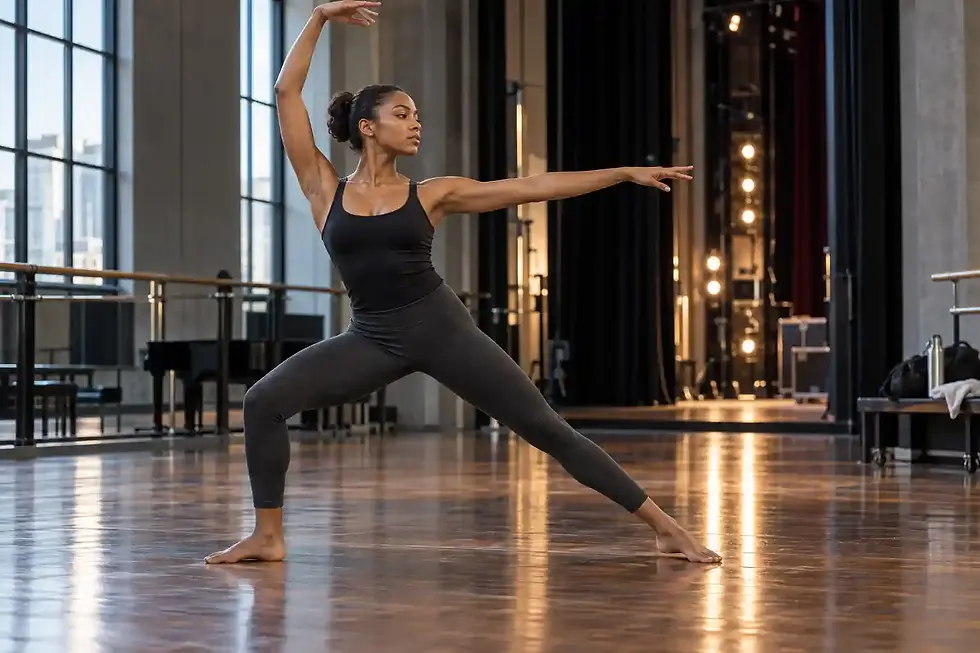
Think about creating length through the spine while keeping the shoulders organized. Maintain an active core without creating unnecessary tension. Use the legs strongly and allow the arms to extend with purpose.
Horton training encourages dancers to become aware of these relationships throughout the entire body.
Over time, stronger placement can give dancers a more dependable physical foundation.
Explore more on this topic in Mastering Dance Placement with Horton Technique Modern Dance. Mastering Dance Placement with Horton Technique Modern Dance
5. Learn to Accept Corrections Positively
Corrections are part of serious dance training.
However, some dancers interpret a correction as evidence that they are performing poorly.
A healthier approach is to view corrections as specific information that can improve your technique.
Listen carefully to what the instructor asks you to change.
Then focus on one correction at a time.
For example, instead of thinking, "I keep doing this wrong," change the goal to, "On this repetition, I will concentrate on keeping my supporting leg organized."
That creates a practical action.
More importantly, it keeps your attention on progress.
6. Strengthen Your Body to Strengthen Your Confidence
Physical preparation can influence mental confidence.
When dancers have enough strength to support a position, balance, transition, or traveling phrase, they can approach movement with less hesitation.
Horton Technique Modern Dance incorporates demanding physical training. Its structured exercises have long been associated with strengthening and stretching the dancer's body. Ailey Pressroom
However, strength should always support technique.
Avoid forcing movements simply because you want them to look bigger. Develop control gradually and respect your current ability.
A smaller movement performed with excellent organization can communicate more confidence than a large movement performed without control.
7. Practice Combinations Without the Mirror
Mirrors provide useful visual feedback, but dancers can become overly dependent on them.
Try occasionally practicing a familiar movement phrase without watching yourself.
Instead, pay attention to how the movement feels.
Notice your balance, weight placement, breathing, direction, and coordination.
This develops greater body awareness.
It can also prepare you for performances because dancers usually cannot rely on a studio mirror once they are onstage.
8. Improve Musicality for Greater Confidence
Dancers often look more confident when they understand the music.
Instead of simply counting movements, listen for rhythm, accents, phrasing, pauses, and changes in energy.
Ask yourself where a movement begins and where it finishes.
Then determine whether the choreography feels sharp, sustained, suspended, grounded, or expansive.
Musical understanding gives dancers something specific to respond to.
Consequently, movements can appear more intentional rather than hesitant.
9. Use Your Focus and Eye Line
Where you look matters.
Constantly looking at the floor can reduce the visual impact of a movement. It may also affect balance and spatial awareness.
Instead, understand where your focus should travel during each phrase.
Allow your eyes to support the direction of your head and body.
When appropriate, project your attention outward.
A clear eye line can immediately give movement greater purpose without requiring exaggerated facial expressions.
10. Develop Confidence Through Consistent Horton Training
Confidence rarely appears overnight.
It develops through repeated experience.
Each class gives dancers another opportunity to practice alignment, strength, coordination, musicality, balance, and expression.
Some days will feel easier than others. However, consistent training helps dancers recognize their progress over time.
The Library of Congress documents Horton's Dance Theater as both a performance company and training center and notes that the technique continued to be taught after Horton's death. Finding Aids
The Ailey tradition also remains closely connected to Horton training. The Ailey School continues to maintain Horton as part of its training and has developed a dedicated Ailey Horton curriculum. Ailey
11. Compare Yourself With Your Previous Progress
Constant comparison with other dancers can distract from your own development.
Every dancer brings different strengths, training histories, proportions, flexibility, musical instincts, and learning speeds into the studio.
Therefore, use your own progress as an important reference point.
Consider what has improved during the past month.
Perhaps your flat back feels stronger. Maybe your balance lasts longer. You might remember combinations more quickly or feel more comfortable moving across the floor.
These changes matter.
Recognizing them can create a more realistic foundation for confidence.
12. Let Technique Support Your Personality
Good technique should not erase individuality.
Once dancers understand a combination, they can begin exploring its expressive possibilities.
Consider the movement's energy.
Is it powerful?
Suspended?
Sharp?
Calm?
Expansive?
Grounded?
Your technical foundation gives you control. Your artistic choices give the movement character.
That combination can create authentic stage confidence.
Dance Confidence Tips with Horton Technique Modern Dance for Better Performance
Confidence becomes especially important when dancers move from the classroom to the stage.
Performance introduces new challenges. There may be lighting, costumes, audiences, unfamiliar spacing, and additional pressure.
Preparation reduces uncertainty.
Practice entrances and exits. Know your spacing. Understand the music. Review difficult transitions. Most importantly, continue using the same technical principles you practiced in class.
IPSOD's guide to Improving Performance Quality Through Horton Technique Modern Dance explores how technical preparation, musicality, movement clarity, and expressive intention can work together in performance. Improving Performance Quality Through Horton Technique Modern Dance
Learn Horton Technique Modern Dance at Inez Patricia
School of Dance
Confidence grows when dancers have opportunities to learn, practice, make corrections, and try again.
At Inez Patricia School of Dance, students can explore dance training in an environment focused on technical development, creativity, discipline, and artistic expression.
The school's current class offerings include Horton Technique alongside other dance training options. IPSOD
Explore the available programs and continue developing your strength, technique, movement quality, and confidence.
Final Thoughts on Dance Confidence
Confidence in dance does not mean believing every movement will be perfect.
It means trusting your preparation enough to keep moving, adapting, and expressing yourself.
Use these Dance Confidence Tips with Horton Technique Modern Dance to focus on strong technique, consistent repetition, musicality, body awareness, and purposeful expression.
With time, dancers can become more comfortable taking up space, accepting corrections, learning challenging choreography, and performing with greater commitment.
Train carefully. Stay curious. Keep progressing.
Then allow your growing technique to support the confidence already developing within your movement.


Comments