


Helping Kids Practice at Home with Horton Technique Modern Dance
Dance progress does not stop when class ends. For young dancers, a short and thoughtful home routine can reinforce skills, improve body awareness, and build the consistency needed for long-term development.

However, practicing Horton Technique Modern Dance at home should not mean trying to recreate an entire studio class. Children benefit most when home practice reinforces material they already understand and that their instructor has approved.
Horton Technique is a codified modern dance technique developed by Lester Horton. It places strong emphasis on stretching, strengthening, coordination, alignment, and full-body awareness. The Alvin Ailey organization describes Horton as a technique designed to fortify, stretch, and strengthen the body. Ailey Pressroom
For parents, the goal is simple: create an environment where children can practice safely, consistently, and positively.
Why Horton Technique Modern Dance at Home Can Help Young Dancers
Children often need repetition before a new movement begins to feel natural.
During dance class, students must listen to instructions, follow music, observe demonstrations, remember choreography, and coordinate their bodies at the same time. That is a lot to process.
A few minutes of home practice gives dancers an opportunity to review familiar movements without the pressure of learning something new.
Over time, consistent practice may support better coordination, posture, musicality, movement memory, and confidence.
The key word, however, is consistent.
A focused 10-minute practice several times during the week can often be more productive than an occasional hour-long session in which the dancer becomes tired or loses concentration.
Create a Safe Space for Horton Technique Modern Dance at Home
Before practicing, children need enough room to move safely.
Parents do not need to create a professional dance studio. Instead, clear a small area where the dancer can extend their arms and legs without hitting furniture, lamps, toys, or other objects.
The floor should provide stable footing. Avoid slippery surfaces and spaces filled with obstacles.
Whenever possible, children should also practice in an area where their movements can remain controlled. Large traveling combinations, powerful jumps, and advanced floor work generally require more space and professional supervision.
Home practice works best as a supplement to studio instruction rather than a replacement for it.
Start with Movements the Dancer Already Knows
One of the most important rules for young dancers is to avoid teaching themselves unfamiliar technical movements.
Instead, encourage your child to review exercises introduced by their instructor.
This approach is particularly important in Horton Technique Modern Dance, where correct body placement helps dancers develop strength and flexibility together.
A young dancer might review simple posture, arm positions, basic flat-back awareness, controlled lateral movement, gentle stretches, rhythmic exercises, or short movement phrases assigned in class.
Older and more experienced students may have additional exercises to review, depending on their instructor's guidance.
At Inez Patricia School of Dance, the current program provides age-appropriate progression in modern dance. Elementary Modern serves dancers ages 9–12 and includes movement influenced by Horton and other modern approaches, while the dedicated Horton Technique class is listed for intermediate-to-advanced dancers ages 13 and older. IPSOD
That progression matters because technical demands should increase as a dancer develops strength, coordination, and experience.
Keep Home Dance Practice Short and Focused
Young dancers do not need lengthy training sessions every day.
In fact, shorter sessions can make it easier for children to stay attentive and maintain good technique.
A simple home practice might follow this structure:
2–3 minutes — Gentle preparation: Begin with easy walking, shoulder movement, ankle movement, and comfortable full-body motion.
3–5 minutes — Technique review: Practice a few familiar exercises that the teacher has already introduced.
3–5 minutes — Choreography or movement memory: Review part of a combination or class sequence.
2–3 minutes — Musicality: Repeat a familiar phrase while listening carefully to counts, rhythm, or changes in the music.
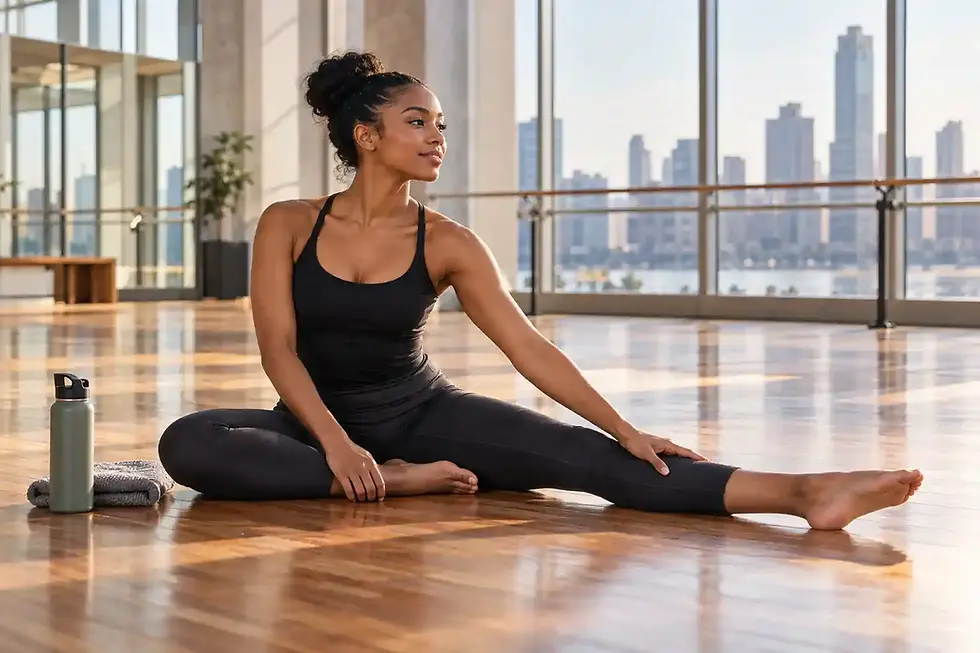
2–3 minutes — Cool down: Finish with gentle movement and comfortable stretching.
The exact routine should depend on the dancer's age, level, and current class material.
Most importantly, stop when technique begins to deteriorate because of fatigue.
Focus on Alignment Instead of Extreme Flexibility
Young dancers sometimes assume that improvement means stretching farther.
It does not.
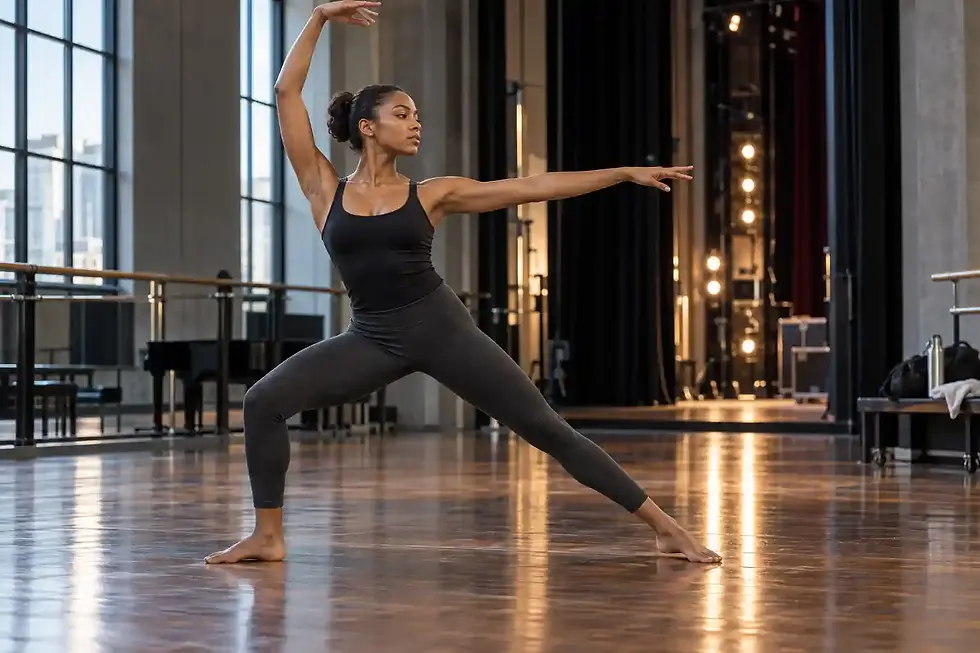
Horton training develops flexibility alongside strength, alignment, coordination, and physical awareness. Therefore, children should not force their bodies into extreme positions simply to achieve a larger stretch.
When practicing Horton Technique Modern Dance at home, encourage controlled movement instead.
For example, ask the dancer to notice whether the shoulders remain relaxed, the torso feels organized, the supporting leg feels stable, and the movement remains smooth.
This type of attention develops useful habits without turning home practice into a flexibility competition.
Practice Dance Posture and Body Awareness
Home practice can also develop awareness without demanding large movements.
Have your dancer stand naturally and notice where the head, shoulders, torso, hips, knees, and feet are positioned.
Then ask them to reproduce a familiar class position slowly.
Can they maintain their posture?
Are they leaning unnecessarily?
Can they extend an arm without raising the shoulder?
Can they bend the knees while keeping control of the torso?
These small observations can make a meaningful difference when dancers return to class.
Horton Technique uses a whole-body approach, which makes awareness of these relationships particularly important. Ailey Pressroom
Use Music to Make Practice More Enjoyable
Technique matters, but dance should still feel like dance.
Music can transform a basic exercise into something more engaging. Encourage your child to practice a familiar movement phrase while listening for the beat.
They can explore performing the same movement at different speeds or noticing accents in the music.
However, technical control should come first. Faster music should never encourage children to rush through movements they cannot yet perform correctly.
As confidence improves, music can help students connect technique with expression.
Let Children Practice Movement Memory
Remembering choreography is another useful skill that children can develop at home.
Ask your dancer to demonstrate a short section from class without immediately giving them hints.
Allow them time to think.
If they forget something, encourage them to remember what came before and what came afterward.
This process builds independence and concentration.
Parents do not need to correct every movement. Unless the teacher has provided specific instructions, it is usually better to let the dancer review what they remember and bring technical questions back to class.
Avoid Turning Practice into Pressure
Young dancers learn best when practice remains constructive.
Constant correction can quickly make a child feel that dance practice is another assignment they have to complete perfectly.
Instead, recognize effort and consistency.
A useful question might be, "What did your teacher ask you to remember this week?"
That shifts attention toward learning rather than performance.
Likewise, allowing children to show parents what they learned can increase engagement. Teaching a parent a simple rhythm or movement pattern can even help the child recall class material.
What Kids Should Not Practice Alone
Certain movements deserve extra caution.
Children should generally avoid attempting unfamiliar advanced Horton exercises, extreme stretching, complex balances, difficult jumps, aggressive strengthening exercises, or movements that create discomfort without guidance from a qualified dance instructor.
Pain should never become a goal of dance practice.
Furthermore, home practice should not be used to push children into movements beyond their current level.
Professional instruction remains especially important as exercises become more physically and technically demanding.
Build Consistency Instead of Chasing Perfection
Parents can help children develop one of the most important habits in dance: consistency.
Improvement rarely happens because of one extraordinary practice session. Instead, dancers progress through repeated exposure to movement combined with instruction, correction, rest, and gradual physical development.
Perhaps one day the dancer focuses on posture.
Another day they review choreography.
Later in the week, they might practice musicality.
These small sessions begin to add up.
Eventually, movements that once required intense concentration can become more organized and familiar.
Connect Home Practice with Studio Training
The most effective home practice reinforces what happens in class.
At the beginning or end of class, dancers can ask their instructor what they should review during the week.
Parents can also encourage children to remember one or two important corrections rather than trying to memorize everything.
This relationship between instruction and practice keeps training focused.
The Ailey School also uses progressive dance education for young dancers, with programs that incorporate modern dance and Horton training as students develop. Ailey Pressroom
Structured progression gives dancers time to build the physical and technical preparation needed for increasingly demanding movement.
Helping Kids Enjoy Horton Technique Modern Dance at Home
Home practice should support curiosity rather than remove the joy from dancing.
Give children room to explore familiar movement, play music, review choreography, and celebrate improvements.
Some days may feel productive. Other days may not.
That is normal.
What matters is developing a healthy relationship with practice.
When children understand that practice is about learning rather than achieving perfection, they can become more patient with themselves. They also begin developing discipline that can support them both inside and outside the dance studio.
Continue Developing Modern Dance Skills at Inez Patricia School of Dance
At Inez Patricia School of Dance, young dancers can build strong foundations through age-appropriate instruction before progressing toward more specialized Horton Technique Modern Dance training.
The current schedule includes Elementary Modern for ages 9–12, while dedicated Horton Technique training is available for intermediate-to-advanced dancers ages 13 and older. IPSOD
Parents can explore the school's broader dance programs, including Ballet, Modern, Horton Technique, Contemporary, Jazz, Tap, Hip-Hop, and other classes designed for different ages and experience levels.



Comments