


Importance of Dance Conditioning in Horton Technique Modern Dance
Dance is both an art form and a demanding physical discipline. Dancers need more than creativity and musicality to perform successfully. They also need strength, flexibility, coordination, balance, endurance, and body awareness.
That is why understanding the importance of dance conditioning is essential for dancers at every level.
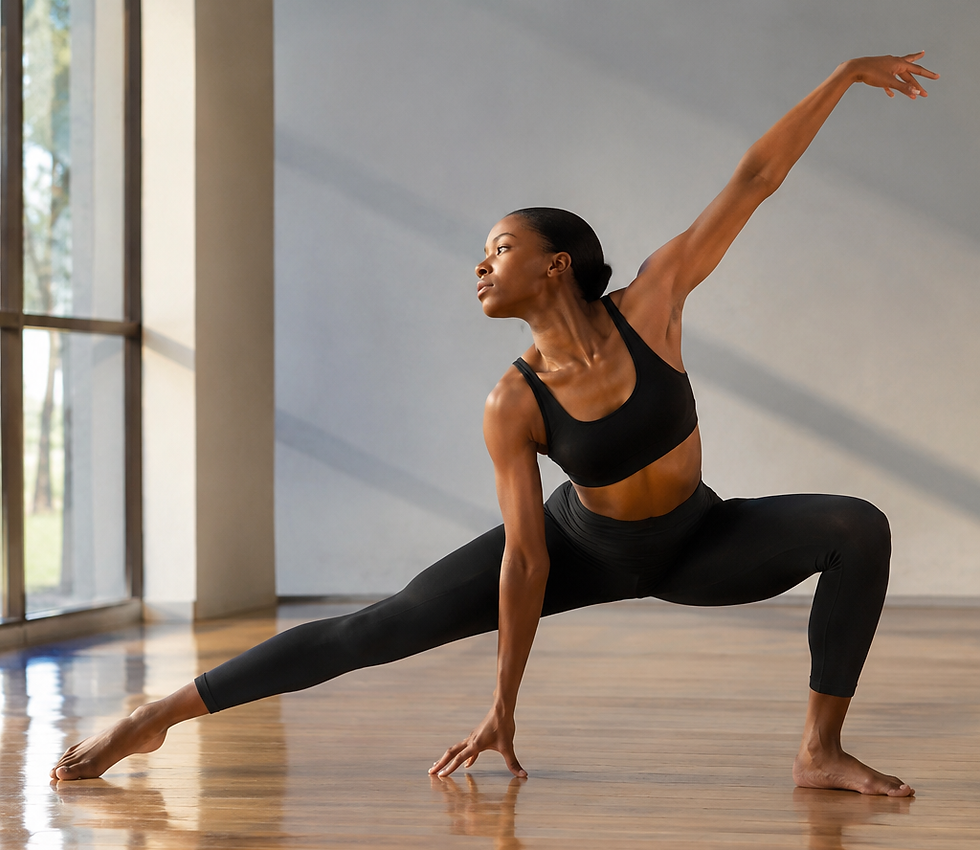
In Horton Technique Modern Dance, physical conditioning is particularly important. Horton training uses a whole-body approach that develops strength, flexibility, coordination, and spatial awareness. At Inez Patricia School of Dance, Horton Technique classes emphasize movements such as lateral stretches, flat backs, deep lunges, and dynamic exercises that help dancers build a strong technical foundation.
However, dance conditioning is not simply about becoming stronger. Instead, it helps dancers prepare their bodies to move with greater control, efficiency, confidence, and expression.
What Is Dance Conditioning?
Dance conditioning refers to physical training designed to improve the abilities a dancer needs for movement and performance.
A well-rounded conditioning program may develop:
Muscular strength
Flexibility
Mobility
Balance
Coordination
Cardiovascular endurance
Muscular endurance
Core stability
Postural control
Body awareness
Unlike general exercise, dance conditioning should complement the demands of dance technique.
For example, a modern dancer may need enough leg strength to control a deep lunge, sufficient core stability to maintain a flat back, and adequate mobility to perform expansive movements.
Therefore, conditioning should support technique rather than compete with it.
Why Is Dance Conditioning Important for Dancers?
The importance of dance conditioning becomes clear when we consider the physical demands placed on dancers.
Dancers repeatedly jump, turn, stretch, balance, travel across the floor, change levels, and control their body weight. These movements require physical preparation.
Dance/USA's Task Force on Dancer Health notes that cross-training can improve overall fitness, stamina, and strength while providing performance benefits and helping reduce injury risk. It also emphasizes that additional training needs to be managed carefully so dancers do not overload their schedules.
Here are several important reasons conditioning matters.
1. Dance Conditioning Builds Functional Strength
Strength gives dancers the ability to control movement.
A dancer needs strong legs to land safely, a stable core to maintain alignment, and sufficient upper-body strength to control the arms and torso.
In Horton Technique Modern Dance, exercises are structured to develop the entire body rather than focusing on only one muscle group.
For example, flat backs require control through the core and spine. Deep lunges challenge the legs and hips. Lateral movements require strength and mobility through the torso.
As a result, conditioning can help dancers develop strength that directly supports their technique.
2. It Supports Flexibility and Mobility
Flexibility is an important part of dance. However, flexibility without strength and control may not translate into better movement.
Effective conditioning combines mobility with muscular control.
Dancers should be able to move through a range of motion while maintaining proper alignment and stability.
This is especially relevant to Horton training because the technique incorporates dynamic stretches and expansive movements.
Horton Technique emphasizes flexibility alongside strength, coordination, and anatomical awareness rather than treating flexibility as an isolated goal.
3. Dance Conditioning Improves Core Stability
A strong and responsive core helps connect the upper and lower body.
Core stability can support:
Balance
Turns
Floor work
Leaps
Tilts
Extensions
Direction changes
Controlled transitions
For modern dancers, core control is particularly valuable because movement frequently shifts between standing, traveling, and floor-based positions.
A stable center allows dancers to move expansively while maintaining control.
4. It Enhances Balance and Coordination
Dance requires multiple body parts to work together.
A dancer may need to coordinate the arms, legs, torso, head, breath, and musical timing simultaneously.
Conditioning exercises can improve proprioception and coordination, helping dancers understand where their bodies are in space.
This becomes particularly useful in Horton Technique Modern Dance, where exercises challenge dancers to coordinate large movements while maintaining alignment and control.
Better coordination can ultimately contribute to cleaner choreography and more confident performance.
5. It Can Support Injury Prevention
Dancers place significant physical demands on their bodies. Therefore, preparing the body for those demands is an important part of responsible training.
The International Association for Dance Medicine & Science highlights strength, flexibility, coordination, alignment, movement efficiency, and endurance as important physical capacities for dancers.
Conditioning can help address physical weaknesses and improve movement capacity. However, it should be progressive and appropriate to the dancer's age, experience, workload, and physical needs.
Most importantly, conditioning should not replace professional medical or physical therapy guidance when a dancer is injured.
6. Dance Conditioning Improves Muscular Endurance
A dancer may perform a technically difficult movement successfully once. Performing it repeatedly during a rehearsal or performance is a different challenge.
Muscular endurance allows dancers to maintain quality as fatigue develops.
For example, a dancer may need to repeat:
Lunges
Jumps
Traveling combinations
Floor sequences
Turns
Large arm movements
When the body is better conditioned, dancers can work toward maintaining technical control throughout longer combinations.
7. It Helps Dancers Perform With Greater Confidence
Physical preparation can influence psychological confidence.
When dancers understand how to control their bodies, difficult movements can become less intimidating.
Instead of worrying about whether they can complete a movement, dancers can focus more attention on:
Musicality
Expression
Dynamics
Storytelling
Performance quality
Connection with the audience
Consequently, conditioning supports not only physical development but also artistic development.
Dance Conditioning and Horton Technique Modern Dance
The relationship between conditioning and Horton Technique is especially strong.
Lester Horton developed a training system that emphasized comprehensive physical development. Modern Horton classes commonly incorporate movements that challenge strength, flexibility, alignment, coordination, and spatial awareness.
At Inez Patricia School of Dance, the Horton Technique program includes lateral stretches, flat backs, deep lunges, and dynamic movements designed to fortify the body and increase flexibility.
This makes conditioning an important part of understanding the technique.
Horton training can help dancers develop:
StrengthThe body becomes better prepared to support powerful movement.
FlexibilityDancers work toward greater mobility while maintaining control.
AlignmentProper positioning helps dancers move efficiently.
CoordinationDifferent parts of the body learn to work together.
BalanceDancers practice maintaining stability through challenging positions.
ExpressionPhysical preparation creates greater freedom for artistic movement.
8. Conditioning Supports Better Dance Technique
Technique and conditioning should work together.
A dancer may understand how a movement should look but lack the physical capacity to execute it correctly.
For example, a dancer might understand the position of a flat back but struggle to maintain it because of insufficient core or back endurance.
Similarly, a dancer may understand a deep lunge but lack the strength and mobility necessary to perform it with control.
Conditioning helps bridge the gap between knowing a movement and being physically prepared to perform it.
9. It Can Improve Training Efficiency
Well-conditioned dancers may be better prepared to handle the physical demands of class and rehearsal.
This does not mean dancers should simply train more.
In fact, excessive training without adequate recovery can contribute to fatigue and overload. Dance/USA specifically recommends adjusting cross-training according to rehearsal and performance demands.
Therefore, effective conditioning should be planned intelligently.
The goal is quality, consistency, and appropriate progression, not simply more exercise.
How Can Dancers Incorporate Conditioning Into Their Training?
A dancer's conditioning routine should complement their regular technique classes.
A balanced program might include:
Core Training
Exercises such as controlled planks, dead bugs, and other core stability movements can help develop trunk control.
Lower-Body Strength
Squats, lunges, and carefully selected resistance exercises can strengthen the muscles required for jumping, landing, traveling, and stabilizing.
Mobility Work
Dynamic mobility exercises can prepare the body for movement while targeted flexibility work can support individual needs.
Cardiovascular Conditioning
Walking, cycling, swimming, or other appropriate activities can help develop cardiovascular endurance.
Balance Training
Single-leg exercises and controlled weight transfers can challenge stability and body awareness.
Recovery
Rest days, adequate sleep, hydration, and appropriate recovery strategies are also part of effective conditioning.
A conditioning program should be adapted to the individual dancer rather than copied from another performer.
Common Mistakes in Dance Conditioning
While conditioning provides many benefits, dancers should avoid several common mistakes.
Doing Too Much Too Quickly
Increasing training volume suddenly can place unnecessary stress on the body.
Instead, progress gradually.
Focusing Only on Flexibility
Flexibility is valuable, but dancers also need strength and control.
A balanced approach is more useful than chasing extreme ranges of motion.
Ignoring Recovery
Training is only one part of physical development.
Recovery allows the body to adapt to training demands.
Treating Pain as Something to Ignore
Persistent or worsening pain should not simply be pushed through.
Dancers should seek appropriate professional evaluation when pain does not resolve or interferes with training.
Copying Another Dancer's Routine
Every dancer has different physical characteristics, training history, goals, and workload.
A conditioning program should therefore be individualized whenever possible.
How Horton Technique Helps Build a Stronger Dancer
Horton Technique Modern Dance provides an excellent example of how physical conditioning can be integrated into dance education.
Rather than separating physical preparation completely from technique, Horton exercises challenge dancers to develop strength, flexibility, coordination, alignment, and expressive movement within the dance class itself.
This whole-body approach is one reason Horton Technique remains valuable for modern and contemporary dancers.
For dancers interested in exploring the technique further, Inez Patricia School of Dance offers Horton Technique training for intermediate and advanced dancers ages 13 and older.
Start Building a Stronger Dance Foundation
The importance of dance conditioning extends far beyond physical strength.
A well-prepared dancer can work toward greater control, mobility, endurance, balance, and confidence. These qualities can support both technical development and artistic expression.
For students studying Horton Technique Modern Dance, conditioning is particularly valuable because the technique demands a strong, coordinated, and responsive body.
Ultimately, the goal is not simply to make dancers stronger.
The goal is to help dancers become more capable, more controlled, more expressive, and better prepared to meet the physical demands of their art.
Learn Horton Technique Modern Dance at Inez Patricia School of Dance
At Inez Patricia School of Dance, dancers can explore professional dance training in a supportive environment focused on technical development and artistic growth.
The school's Horton Technique program emphasizes strength, flexibility, coordination, body awareness, and expressive movement.


Comments