


Partnering Skills for Contemporary Dancers
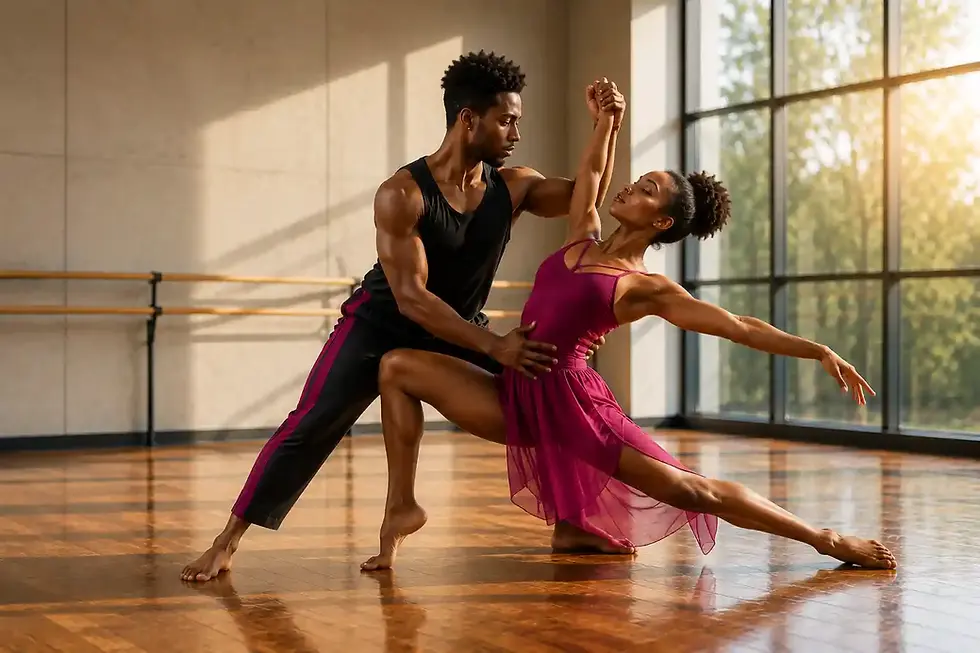
Contemporary dance often celebrates connection, creativity, and shared movement. While solo work allows dancers to explore individual expression, partnering introduces a new dimension of collaboration. Developing strong partnering skills for contemporary dancers helps performers create seamless movement, improve communication, and build trust on stage.
Whether you are new to partnering or looking to refine your abilities, understanding the fundamentals can make every duet, ensemble piece, or contact improvisation session more effective and enjoyable.
Why Partnering Is Important in Contemporary Dance
Partnering allows dancers to explore movement possibilities that cannot be achieved alone. Through shared weight, counterbalance, lifts, and physical communication, dancers create dynamic and visually compelling performances.
Strong partnering skills offer several benefits:
Improve body awareness
Enhance spatial awareness
Develop trust between dancers
Increase movement versatility
Strengthen coordination and timing
Encourage creative collaboration
As a result, dancers become more adaptable performers who can respond effectively to changing choreographic demands.
Partnering Skills for Contemporary Dancers: Building Trust Between Dance Partners
Trust forms the foundation of all successful partnering work. Without trust, dancers may hesitate during lifts, weight-sharing exercises, or complex transitions.
To develop trust:
Practice Consistently Together
Regular rehearsals allow dancers to understand each other's movement habits, strengths, and timing.
Start with Simple Exercises
Begin with basic weight-sharing activities before progressing to advanced lifts and supports.
Communicate Clearly
Discuss concerns, challenges, and expectations openly. Effective communication reduces misunderstandings and improves safety.
Stay Present
Focused attention helps dancers respond quickly to movement changes and partner cues.
Understanding Weight Sharing
One of the most important partnering skills for contemporary dancers is learning how to share weight effectively.
Weight sharing involves transferring body weight between partners while maintaining balance and control. It requires:
Core engagement
Proper alignment
Controlled momentum
Awareness of a partner's center of gravity
Through regular practice, dancers learn how to support each other safely while creating fluid movement sequences.
Developing Physical Communication
Partnering relies heavily on non-verbal communication. Dancers constantly exchange information through touch, pressure, and movement quality.
Key Elements of Physical Communication
Touch Sensitivity
Light contact often communicates directional changes and movement intentions.
Responsive Listening
Rather than anticipating movement, dancers should respond to what is actually happening in the moment.
Shared Timing
Partners must develop a mutual understanding of rhythm, tempo, and pacing.
When physical communication improves, movement becomes more natural and synchronized.
Essential Lifting Techniques
Lifts are a common feature in contemporary dance partnering. However, successful lifts depend on technique rather than strength alone.
Engage the Core
A strong core provides stability and reduces unnecessary strain.
Use Proper Alignment
Maintaining correct posture helps distribute weight efficiently.
Lift with the Legs
Power should come primarily from the legs instead of the lower back.
Rehearse Progressively
Start with smaller supported movements before attempting advanced lifts.
Safety should always remain the top priority during lift training.
Improving Timing and Coordination
Timing is crucial when two dancers move as one. Even a slight delay can affect balance, transitions, and overall performance quality.
Ways to improve timing include:
Practicing with music
Using verbal counts
Repeating movement phrases consistently
Working with varying tempos
Recording rehearsals for review
Over time, dancers develop an intuitive understanding of each other's movement patterns.
The Role of Contact Improvisation
Contact improvisation is an excellent method for developing partnering skills for contemporary dancers. This practice encourages exploration through shared weight, momentum, and physical dialogue.
Benefits include:
Increased adaptability
Enhanced movement creativity
Greater body awareness
Improved reaction time
Stronger trust between partners
Many contemporary dance companies incorporate contact improvisation exercises into regular training sessions.
Common Partnering Mistakes to Avoid
Even experienced dancers can encounter challenges when partnering.
Relying Solely on Strength
Good partnering depends on technique, leverage, and timing rather than muscular force.
Ignoring Communication
Miscommunication often leads to awkward transitions and safety concerns.
Looking Down Constantly
Maintaining visual awareness helps dancers stay connected and aware of surrounding space.
Skipping Warm-Ups
Proper preparation reduces injury risk and improves movement quality.
Recognizing these common mistakes can accelerate progress and create safer rehearsal environments.
How Contemporary Dance Training Improves Partnering
Comprehensive contemporary dance training develops many skills that support partnering, including:
Core strength
Balance
Flexibility
Spatial awareness
Movement efficiency
Artistic expression
At professional dance schools, dancers regularly practice exercises that combine technical development with collaborative movement exploration.
For additional contemporary dance training resources, explore the programs available at Inez Patricia School of Dance.
Conclusion
Developing strong partnering skills for contemporary dancers requires patience, trust, communication, and consistent practice. As dancers learn to share weight, coordinate movement, and respond to one another effectively, they unlock new creative possibilities both in rehearsal and performance.
By focusing on trust-building, physical communication, lifting technique, and coordination, dancers can create powerful partnerships that enhance both artistic expression and technical excellence.


Comments