


Performance Preparation with Horton Technique Modern Dance
A strong performance begins long before a dancer steps onto the stage. Physical readiness, concentration, musical awareness, technical control, and confidence all contribute to what an audience eventually sees.
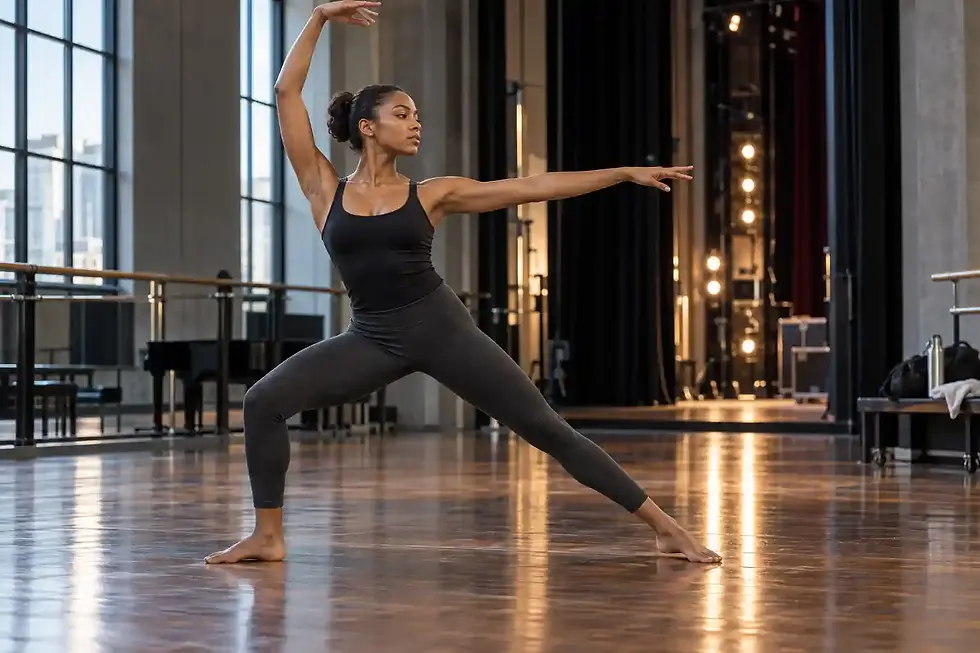
Performance Preparation with Horton Technique Modern Dance gives dancers a structured way to bring these elements together. Instead of relying only on repeated choreography, dancers can use technical training to prepare the entire body and mind for the demands of performing.
Developed by Lester Horton, Horton Technique uses organized exercises that challenge strength, flexibility, coordination, rhythm, spatial awareness, and body control. The Ailey organization describes Horton training as including locomotion, rhythm, prelude, and fortification exercises, along with movements such as roll downs, flat backs, and lateral Ts. Ailey Dance
At Inez Patricia School of Dance in Orlando, Horton training forms part of a broader dance education approach that develops technique alongside artistry and expression. The school's current program includes Horton Technique training for intermediate and advanced dancers. IPSOD
Why Performance Preparation Matters for Dancers
Rehearsing choreography is important, but knowing the steps is only one part of performing successfully.
A dancer also needs enough physical readiness to execute movement consistently. In addition, the dancer must remain aware of timing, spacing, transitions, musical changes, and artistic intention.
Good preparation can help dancers enter a performance feeling organized rather than rushed.
It can support:
Physical readiness
Technical accuracy
Movement clarity
Muscular activation
Balance and coordination
Musical awareness
Spatial awareness
Concentration
Artistic intention
Performance confidence
Therefore, performance preparation should become part of regular dance training rather than something dancers consider only on performance day.
Performance Preparation with Horton Technique Modern Dance Starts With the Body
Before focusing on expression, dancers need a body that is ready to move.
Horton Technique Modern Dance places significant demands on the entire body. Dancers may work through lateral stretches, flat backs, deep lunges, balances, fortifications, traveling movements, and coordinated movement patterns.
Consequently, dancers should gradually prepare their muscles, joints, cardiovascular system, and nervous system before attempting demanding choreography.
The International Association for Dance Medicine & Science explains that a thorough warm-up prepares both the body and mind for class, rehearsal, or performance. Warm-up activity gradually increases body temperature and engages the cardiorespiratory, muscular, and nervous systems before more technical movement begins. IADMS
Rather than immediately attempting maximum flexibility or explosive movement, dancers can begin with controlled activity and gradually increase intensity.
Build Heat Gradually
A dancer might begin with gentle traveling movements, arm swings, shoulder movements, ankle mobility, controlled bends, and easy torso movement.
Next, the dancer can progress toward larger movement patterns.
The goal is not exhaustion. Instead, the goal is to feel warm, responsive, coordinated, and ready for the choreography ahead.
Use Horton Training to Reinforce Alignment
Performance conditions can create additional pressure. Music, lighting, costumes, spacing, entrances, exits, and an audience can all compete for a dancer's attention.
Strong technical habits give dancers something reliable to return to.
Horton Technique encourages awareness of how different parts of the body relate to one another. During a flat back, lateral movement, lunge, balance, or traveling phrase, the dancer must organize the torso, pelvis, legs, feet, shoulders, and arms.
Because of this whole-body approach, dancers can practice maintaining alignment even as movement becomes more dynamic.
Before performing, revisit familiar technical principles:
Keep the spine organized. Maintain awareness of the pelvis. Support the torso through the center. Track the knees and feet carefully. Keep the shoulders free from unnecessary tension.
These details can make complex movement appear clearer and more intentional.
Prepare Strength Without Creating Fatigue
Performance preparation should activate strength rather than drain it.
A dancer does not need to complete an exhausting conditioning session immediately before going onstage.
Instead, use controlled exercises that remind the body how to support movement.
Horton Technique includes structured fortification studies as part of its training vocabulary. The Ailey School's approach to Horton training continues to use these progressions within its teaching methodology.
During pre-performance preparation, dancers can focus on moderate activation of the legs, core, feet, ankles, and postural muscles.
The dancer should finish feeling energized rather than depleted.
Connect Technique With Musicality
Physical preparation alone does not create an engaging performance.
Music provides dancers with timing, phrasing, accents, pauses, changes in energy, and emotional context. Therefore, musical preparation deserves attention before going onstage.
Horton training incorporates rhythm and musical dynamics into technical study. Ailey's description of Horton instruction specifically identifies rhythm and musicality as elements within the technique's movement vocabulary. Ailey Dance
Before a performance, dancers can mentally review:
Where does the phrase begin?
Which movement follows a musical accent?
Where does the choreography accelerate?
Where should movement breathe?
Which moments require stillness?
When dancers understand these musical landmarks, they are less dependent on simply counting steps.
Instead, movement begins to connect naturally with the music.
Practice Transitions, Not Just Big Moments
Dancers often spend considerable rehearsal time working on jumps, extensions, balances, turns, or dramatic poses.
However, audiences also see everything that happens between those moments.
Transitions reveal technical control.
A dancer should know how weight moves from one foot to another, how one shape develops into the next, and where the eyes, torso, and arms travel during a change of direction.
Horton Technique encourages dancers to connect clearly defined shapes through controlled movement. This makes transition practice especially valuable for stage preparation.
Instead of rehearsing only the highlight of a combination, practice the entrance, movement pathway, transition, final position, and exit.
The result can feel more complete and intentional.
Rehearse Spatial Awareness Before Going Onstage
Studio spacing and stage spacing may feel very different.
A dancer needs to understand where choreography begins, where it travels, and how much space each phrase requires.
Marking important stage positions can help.
For example, dancers can identify:
Starting position
Center-stage reference
Diagonal pathways
Formation changes
Partner relationships
Entrances
Exits
Final position
Horton Technique emphasizes awareness of movement in space as well as control of the body itself. That spatial understanding becomes especially useful when dancers must maintain clean formations while performing dynamically.
Mental Preparation Is Part of Performance Preparation
A dancer can be physically ready but mentally distracted.
Therefore, the final minutes before a performance should also create focus.
Mental preparation does not need to be complicated.
A dancer can quietly review the opening position, first movement phrase, important musical cues, difficult transitions, and final exit.
The IADMS warm-up guidance also recognizes mental preparation as part of preparing dancers for performance demands. IADMS
Rather than mentally running through every possible mistake, focus on useful movement cues.
Think:
Length. Grounding. Breath. Timing. Space. Intention.
Simple cues give the mind something productive to follow once the performance begins.
Bring Artistic Intention Into the Preparation
Technique provides structure, but performance requires communication.
Once the dancer feels physically prepared, attention can shift toward artistic intention.
Ask:
What does this choreography communicate?
Where should the movement feel powerful?
Where should it soften?
Where should the dancer direct focus?
What changes in energy occur throughout the work?
Performance quality grows when technical decisions support artistic purpose.
This connection between structured movement and expressive freedom is an important part of Horton's legacy. Historical materials held by the Library of Congress document Horton's training technique and its continued influence through dancers who studied and taught his work. Finding Aids
A Simple Horton-Inspired Performance Preparation Routine
Dancers can organize preparation into a short sequence before rehearsal or performance:
1. Begin with gentle movement.Gradually increase circulation and body temperature.
2. Mobilize the joints.Move the ankles, knees, hips, spine, shoulders, and arms through comfortable ranges.
3. Activate the center and legs.Use controlled movements rather than exhausting conditioning exercises.
4. Introduce dynamic mobility.Add appropriate leg swings, lunges, torso movements, and lateral stretches.
5. Review Horton-based alignment.Revisit flat-back organization, lateral placement, grounding, and whole-body coordination.
6. Mark important choreography.Review entrances, transitions, difficult sections, formations, and exits.
7. Connect with the music.Identify important rhythmic cues, accents, and changes in phrasing.
8. Establish artistic intention.Remember what the choreography should communicate.
9. Stay warm.Avoid long periods of inactivity before entering the stage.
10. Perform with focus.Trust the preparation and direct attention toward the choreography rather than toward perfection.
Avoid Overdoing Your Pre-Performance Routine
More preparation does not automatically produce a better performance.
Excessive stretching may leave a dancer feeling less stable. Likewise, demanding strength exercises can create unnecessary fatigue immediately before performing.
Preparation should gradually bring the dancer toward performance intensity.
It should not become another full dance class.
Individual needs also differ. Age, training level, choreography, previous activity, and physical demands all affect how a dancer should prepare.
For that reason, dancers should follow the guidance of their instructor and communicate when something feels painful or unusual.
Consistent Training Creates Performance Confidence
Confidence onstage does not come only from positive thinking.
It also grows from preparation.
When dancers repeatedly practice alignment, timing, strength, coordination, musicality, and spatial awareness, those skills become increasingly familiar.
That familiarity gives performers a stronger technical foundation when performance conditions become demanding.
Performance Preparation with Horton Technique Modern Dance therefore extends far beyond the minutes immediately before going onstage. Regular training creates the physical and artistic habits dancers eventually rely on during performances.
Learn Horton Technique Modern Dance at Inez Patricia School of Dance
Inez Patricia School of Dance offers dancers opportunities to develop strength, coordination, flexibility, body awareness, and expressive movement through structured dance training.
The school's current schedule includes Horton Technique for dancers ages 13+ at the intermediate/advanced level, along with additional modern, contemporary, ballet, flexibility, and performance-focused classes. IPSOD
Explore the Inez Patricia School of Dance Horton Technique and class programs or view the current IPSOD class schedule.
You can also continue learning with Improving Performance Quality Through Horton Technique Modern Dance.
Final Thoughts
Great performances are built through preparation.
A dancer who warms up gradually, organizes alignment, activates strength, reviews transitions, understands the music, and establishes artistic intention enters the stage with useful tools already in place.
Through Performance Preparation with Horton Technique Modern Dance, dancers can connect technical discipline with confidence and expression.
The goal is not simply to be ready to execute choreography.
The goal is to become physically alert, mentally focused, technically organized, and artistically ready to perform.



Comments