


Balance Challenges in Horton Technique Modern Dance
Balance Challenges in Horton Technique Modern Dance can help dancers develop greater awareness of alignment, stability, and controlled movement. Through focused training, dancers explore how strength, coordination, and body awareness support their dance technique.

Horton Technique includes studies that develop strength, flexibility, coordination, and spatial awareness. Its training vocabulary also features movements that challenge a dancer's ability to maintain control through different shapes and positions.
However, balance is not simply about standing on one leg. It involves coordinating the torso, pelvis, legs, and arms while maintaining awareness of movement and space.
At Inez Patricia School of Dance, dancers can explore how focused training supports their technical development and expressive movement.
Dance Learn Grow Be Inspired.
What Makes Balance Challenging in Horton Technique Modern Dance?
Balance becomes more demanding when a dancer must maintain stability while performing complex movements.
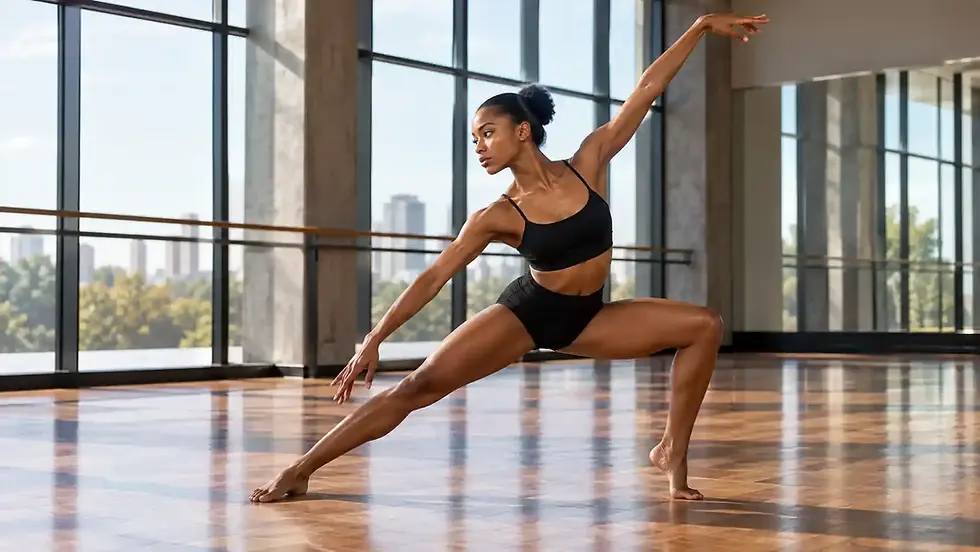
In Horton Technique Modern Dance, dancers work with extended lines, lunges, tilts, turns, and other movements that require coordination and body control. These positions challenge dancers to manage their weight distribution while maintaining purposeful movement.
Several factors can influence balance:
Core control and torso stability
Alignment of the pelvis and spine
Strength in the supporting leg
Coordination between the upper and lower body
Awareness of weight transfer
Concentration and movement timing
As a result, balance training requires more than physical strength. Dancers must also learn how to organize their bodies during movement.
1. Understanding Body Alignment
Proper alignment provides an important foundation for balance.
When dancers work through Horton exercises, they need to pay attention to how their head, torso, pelvis, and legs relate to one another. A well-organized body position can support efficient movement and improve awareness.
Research examining Lester Horton Technique through Pilates principles identified an emphasis on body alignment, pelvic and torso flexibility, and core training.
How to Improve Alignment
Dancers can practice the following:
Maintain awareness of the spine during movement.
Avoid unnecessary tension in the shoulders.
Coordinate the pelvis with the supporting leg.
Keep the body organized while transitioning between positions.
Work within a comfortable and controlled range of motion.
Remember: Alignment should support movement rather than create unnecessary stiffness.
2. Developing Core Strength for Better Balance
Core strength plays an important role in supporting the torso during movement.
In Horton Technique Modern Dance, dancers frequently work with extended limbs and changing body positions. A stable torso can help them manage these movements with greater control.
However, core strength alone does not guarantee balance. Coordination, leg strength, alignment, and practice also contribute to stability.
Practice Ideas for Dancers
Under qualified instruction, dancers can develop core awareness through:
Controlled floor exercises
Torso stabilization activities
Slow transitions between positions
Balance exercises with proper alignment
Movement combinations that require controlled weight shifts
Start with movements you can perform safely and gradually increase the challenge as your control develops.
3. Managing Weight Distribution
One of the most common balance challenges occurs when dancers shift their weight from one leg to another.
Horton training includes movement studies that explore different body shapes, directional changes, and spatial patterns. These activities require dancers to recognize where their weight is placed and how it changes during movement.
For example, a dancer may need to move from a wide stance into a single-leg position. During this transition, the dancer must coordinate the supporting leg, torso, and arms.
Ways to Improve Weight Transfer
Practice slowly.
Focus on the movement pathway rather than rushing toward the final position.
Use controlled transitions.
Move between positions while maintaining awareness of your supporting leg.
Maintain breathing.
Avoid holding your breath during challenging movements.
Develop consistency.
Repeat exercises with attention to technique instead of relying on speed.
Over time, consistent practice can help dancers become more aware of how their bodies respond to weight shifts.
4. Building Stability in Extended Positions
Extended dance positions can challenge a dancer's ability to maintain balance while creating clear lines.
Horton Technique is recognized for its emphasis on broad movement, extended body shapes, and dynamic use of space.
When a dancer extends an arm or leg, the body must coordinate the movement while maintaining stability.
For this reason, dancers should focus on the relationship between extension and control.
Training Tips
Begin with a stable position.
Extend one limb at a time when appropriate.
Maintain awareness of the supporting leg.
Avoid forcing the body into a position.
Return to a neutral position with control.
Balance training should be adapted to the dancer's experience and physical readiness.
5. Improving Balance During Turns and Transitions
Turns and transitions introduce additional coordination demands.
A dancer may need to change direction, shift weight, and maintain a clear movement pathway within a single combination.
Horton training includes studies involving turns, jumps, and directional movement, making coordination an important part of the learning process.
How Dancers Can Practice
Step 1: Understand the movement.Learn the sequence before increasing speed.
Step 2: Identify the supporting leg.Know where your weight should be placed during each stage.
Step 3: Practice the transition.Break the movement into smaller sections.
Step 4: Add musical timing.Once the pathway becomes familiar, practice with the appropriate rhythm.
Progressive training allows dancers to build confidence while respecting their individual learning pace.
6. Using Breath and Focus to Support Balance
Balance involves physical and mental awareness.
During challenging movements, dancers may become tense or lose concentration. Controlled breathing and focused attention can help them remain aware of their movement.
Breathing should not be used as a substitute for technical preparation. Instead, it can support a more organized approach to practice.
Helpful Reminders
Breathe naturally during exercises.
Keep your attention on the movement.
Avoid unnecessary muscular tension.
Stay aware of your alignment.
Give yourself time to recover between demanding exercises.
With consistent practice, dancers can develop greater awareness of how concentration affects their movement quality.
Common Balance Mistakes in Modern Dance
Understanding common challenges can help dancers approach their training more effectively.
1. Rushing Through Movements
Moving too quickly can make it harder to recognize weight shifts and alignment issues.
Solution: Practice the movement slowly before increasing the pace.
2. Locking the Supporting Knee
Excessive stiffness in the supporting leg can interfere with comfortable movement.
Solution: Follow instructor guidance on appropriate leg alignment and control.
3. Losing Torso Awareness
The torso may shift unexpectedly when the arms or legs extend.
Solution: Practice maintaining awareness of the torso during extensions.
4. Forcing Flexibility
Pushing beyond a comfortable range can compromise control and increase injury risk.
Solution: Develop mobility gradually and work within your current capabilities.
5. Ignoring Recovery
Repeated balance exercises without sufficient rest may lead to fatigue.
Solution: Include appropriate breaks and adjust the training intensity when needed.
How Horton Technique Modern Dance Supports Balance Development
Horton Technique offers a structured approach to studying strength, flexibility, coordination, and movement awareness.
Its exercises include different studies designed to develop physical capabilities and explore movement possibilities. Balance studies form part of the broader Horton training vocabulary.
Rather than treating balance as an isolated skill, dancers can incorporate it into their overall training.
This approach encourages students to develop technical control while exploring expressive movement.
Key Areas of Development
Training Area | How It Relates to Balance |
Core control | Supports torso stability |
Leg strength | Helps manage weight-bearing positions |
Alignment | Encourages organized body positioning |
Coordination | Connects different body movements |
Spatial awareness | Supports movement through space |
Focus | Helps maintain attention during challenging exercises |
Each dancer develops at a different pace. Consistent instruction and appropriate progression are important parts of the learning process.
Balance Training Tips for Beginners
If you are new to Horton Technique Modern Dance, balance exercises should be approached gradually.
You do not need to master every challenging position immediately. Instead, focus on building a reliable foundation.
Beginner-Friendly Approach
Start with preparation.Warm up according to your instructor's guidance.
Practice foundational positions.Develop awareness of alignment and weight distribution.
Work on controlled movement.Avoid rushing through exercises.
Ask for feedback.An experienced instructor can help identify areas for improvement.
Progress gradually.Increase the difficulty only when you can perform the movement with appropriate control.
Balance development is a continuous process. Patience and consistency can support your growth as a dancer.
Improve Your Dance Training at Inez Patricia School of Dance
Developing balance requires practice, guidance, and a willingness to learn.
At Inez Patricia School of Dance, students can explore dance training while developing their technical skills and artistic confidence.
Whether you are beginning your dance journey or working to refine your existing abilities, structured instruction can help you build a stronger foundation.
Explore our website to learn more about our dance programs and training opportunities.
Dance Learn Grow Be Inspired.
Conclusion
Balance challenges are an important part of developing technical skills in Horton Technique Modern Dance.
Through focused practice, dancers can explore alignment, core control, weight distribution, and coordinated movement. These elements contribute to a stronger understanding of how the body moves through space.
Most importantly, balance development should be approached with patience and proper instruction.
Keep practicing, stay curious, and allow your dance technique to grow.
Your dance journey starts with every step.




Comments