


Building Balance in Horton Technique Modern Dance
Balance is essential for every dancer. Whether performing turns, changing directions, or moving across the floor, dancers need stability and control to execute movements with confidence.
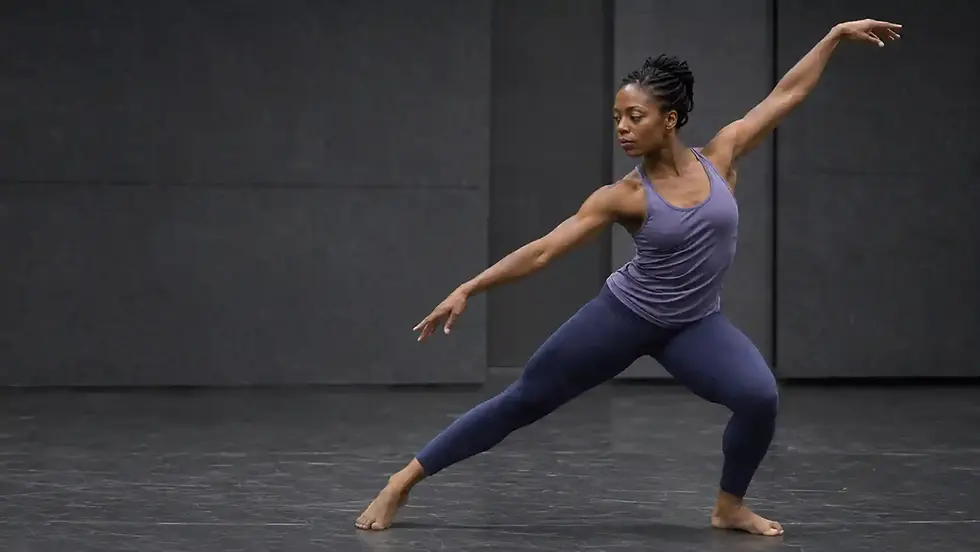
Building Balance in Horton Technique Modern Dance helps dancers develop these skills through structured movement, coordinated weight shifts, and full-body awareness.
Created by Lester Horton, this modern dance technique emphasizes strength, flexibility, coordination, and anatomical understanding. Its exercises encourage dancers to explore movement while maintaining physical control.
At Inez Patricia School of Dance, students can develop balance alongside artistic expression, musicality, and technical discipline.
However, improving balance involves more than holding a position. It requires dancers to understand how their bodies respond to movement.
Why Balance Matters in Horton Technique Modern Dance
Balance allows dancers to move confidently without losing control of their posture or movement pathways.
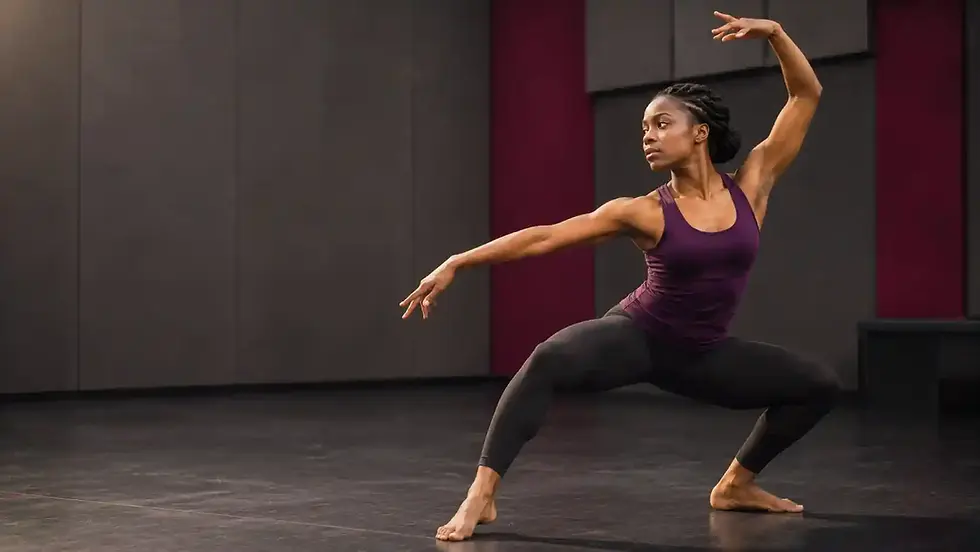
For example, a dancer must adjust body weight while moving from a wide stance into a turn. Similarly, a controlled extension requires coordination between the supporting leg, torso, and arms.
Consequently, balance plays an important role in several areas of dance training.
Static Balance and Dynamic Balance
Static balance involves maintaining stability while holding a position. Dancers use this ability during sustained shapes and controlled extensions.
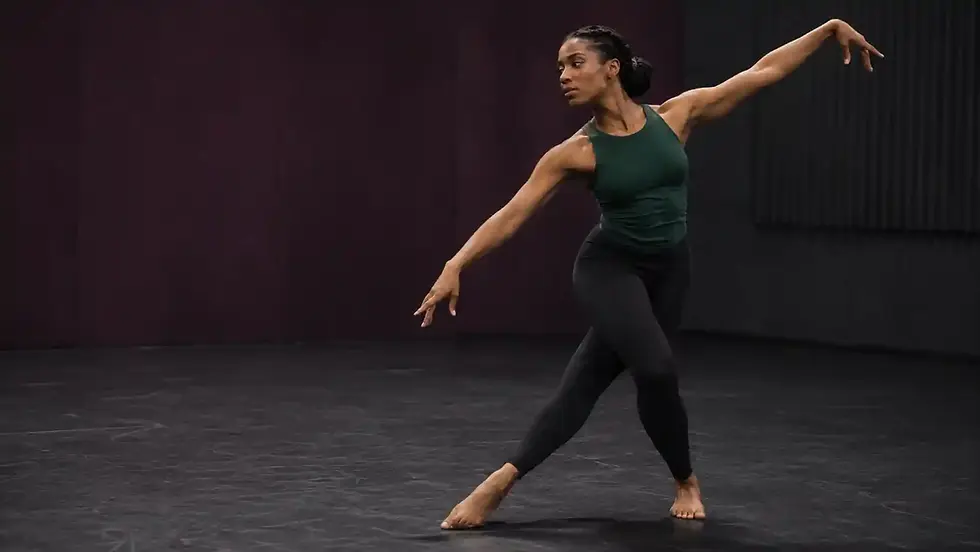
Dynamic balance, meanwhile, involves maintaining or recovering stability while moving. This skill supports directional changes, traveling combinations, and transitions.
Both abilities contribute to stronger dance technique.
According to The Ailey School, Horton training emphasizes whole-body strength, spatial awareness, and dynamic movement across different levels and planes.
Therefore, balance development fits naturally within the technique's broader training approach.
Building Balance in Horton Technique Modern Dance Through Body Alignment
Alignment provides an important foundation for movement control.
When dancers organize their posture, they can manage their weight more effectively. However, good alignment does not mean keeping every muscle rigid.
Instead, dancers should develop a responsive relationship between their spine, pelvis, supporting legs, and feet.
Understand Your Center of Gravity
The body's center of gravity changes in relation to its supporting base during dance movements.
For instance, shifting sideways changes the relationship between the torso and feet. The supporting muscles must respond to maintain stability.
Dancers can improve this awareness by practicing slow and deliberate movements.
Strengthen the Supporting Leg
The supporting leg plays a major role in maintaining balance.
Ankle control, hip stability, and coordinated knee movement help dancers manage body weight.
Furthermore, strong supporting muscles allow dancers to move into and out of positions with greater control.
Coordinate the Core and Upper Body
Core stability supports the relationship between the pelvis and torso.
Meanwhile, the arms contribute to balance by influencing body position and movement.
Instead of concentrating only on the feet, dancers should consider how their entire body works together.
Explore our related guide, Building Core Strength with Horton Technique Modern Dance, to understand this connection.
5 Practical Exercises for Building Better Dance Balance
The following beginner-friendly exercises can complement Horton training. They are general balance-development drills rather than a prescribed sequence from the codified Horton syllabus.
Practice under appropriate instruction and adjust each exercise to your experience.
1. Establish a Grounded Standing Position
Begin with your feet comfortably apart and parallel.
Distribute your weight evenly while keeping your knees responsive and your spine comfortably aligned.
Next, shift your weight slightly forward and backward without lifting your feet.
Return to the center after each movement.
Repeat slowly for approximately six controlled cycles.
Training benefit: Encourages awareness of weight distribution and your connection to the floor.
2. Practice Controlled Side-to-Side Weight Transfers
Start in a comfortable wide stance.
Gradually transfer your weight toward one leg while allowing that knee to bend naturally.
Keep your upper body coordinated with the movement.
Then, return through the center and move toward the opposite side.
Repeat six times in each direction.
Training benefit: Develops lateral stability and coordination during directional changes.
3. Introduce a Small Single-Leg Balance
Stand upright with both feet grounded.
Shift your weight onto one leg. Slowly raise the opposite foot a short distance from the floor.
Maintain a comfortable, steady position for approximately three seconds.
Afterward, lower the foot with control.
Repeat three to five times on each side, using a stable support when necessary.
Training benefit: Challenges supporting-leg stability and postural awareness without requiring extreme extensions.
4. Add Controlled Quarter-Turn Steps
Begin in a grounded standing position.
Step into a slow quarter turn while keeping your movements organized.
Allow your head, torso, and supporting leg to coordinate naturally.
Finish in a stable position before beginning another turn.
Practice both directions.
Training benefit: Develops rotational awareness, controlled foot placement, and stability following turns.
5. Connect Balance Through Traveling Movement
Create a simple four-count movement phrase.
On the first count, step sideways. On the second, transfer your weight completely.
During the third count, bring your trailing foot toward the supporting leg.
Finally, return to a balanced stance.
Repeat the sequence while maintaining a comfortable rhythm.
Training benefit: Encourages dynamic balance and controlled movement transitions.
Improve Balance Through Rhythm and Coordination
Balance does not exist separately from musicality.
In Horton Technique Modern Dance, dancers often coordinate movement with clear rhythmic patterns. These patterns help organize timing and direction.
As dancers become more comfortable with an exercise, they can explore different movement speeds.
Begin Slowly Before Increasing Tempo
Moving too quickly can hide balance problems.
Therefore, learn the movement pathway at a manageable pace before introducing faster counts.
Gradually increasing the tempo allows dancers to challenge coordination without immediately sacrificing control.
Use Visual Focus
A steady visual reference can help dancers organize balance during practice.
For example, focusing on a stationary point during a simple standing exercise may make it easier to notice unwanted movement.
During traveling phrases, dancers should coordinate their gaze with the direction and purpose of the movement.
Coordinate Breathing With Movement
Breathing naturally can help dancers avoid unnecessary tension.
Instead of holding your breath through challenging positions, maintain a comfortable breathing pattern.
This approach supports a more relaxed and attentive training experience.
Common Mistakes That Affect Dance Balance
Developing balance also requires recognizing habits that interfere with movement.
Rushing the transition: Moving quickly between positions can reduce the opportunity to control weight shifts. Practice each stage before increasing the speed.
Holding unnecessary tension: Excessive stiffness can make movement less responsive. Maintain muscular support without gripping every joint.
Ignoring the supporting foot: The foot provides important sensory information during balance. Pay attention to how your weight contacts the floor.
Attempting difficult positions too early: Advanced balances require preparation. Begin with manageable exercises and progress according to your instructor's guidance.
Practicing while excessively fatigued: Fatigue may affect movement quality. Include appropriate breaks and avoid forcing repetitions.
For a closer look at technical difficulties, read Balance Challenges in Horton Technique Modern Dance.
How Consistent Practice Supports Balance Development
Improving balance takes time, repetition, and thoughtful instruction.
A 2024 systematic review published in the Journal of Bodywork and Movement Therapies examined balance-training interventions for dancers.
The researchers found promising results for neuromuscular training. However, they also noted limitations in the quality of the available studies.
This evidence suggests that structured supplementary balance work may help dancers improve stability.
For beginners, a practical starting point is a short period of focused practice within regular training sessions.
For example, dancers might spend five to ten minutes practicing controlled weight transfers and basic balances, two or three times weekly.
This is a suggested practice routine, not a clinically established training prescription.
Most importantly, quality matters more than completing large numbers of repetitions.
Building Balance in Horton Technique Modern Dance at IPSOD
At Inez Patricia School of Dance, Horton Technique offers students opportunities to explore movement through strength, coordination, flexibility, and spatial awareness.
Our approach emphasizes technical development while encouraging artistic expression.
Through age-appropriate instruction, dancers can work toward stronger movement foundations and improved confidence.
Furthermore, learning within a structured class allows students to receive feedback and adjust their technique as they progress.
Whether you are a beginner or an experienced dancer, balance training can support your continued development.
Explore our dance classes and Horton Technique program to learn more about training opportunities.
Dance. Learn. Grow. Be Inspired.
Frequently Asked Questions
Does Horton Technique Modern Dance help improve balance?
Horton training includes movements that challenge strength, alignment, coordination, and weight control. These qualities can contribute to improved balance with consistent, appropriate practice.
How can beginners develop better balance for modern dance?
Beginners can start with simple standing exercises, slow weight transfers, and short single-leg balances. Proper instruction helps establish sound movement habits.
Why is core strength important for dance balance?
Core strength helps support the torso as dancers shift weight, extend limbs, and change direction. However, balance also depends on leg strength, coordination, and sensory awareness.
How long does it take to improve dance balance?
Progress varies according to training experience, exercise difficulty, and practice consistency. Dancers may notice gradual improvements over several weeks, although there is no guaranteed timeline.
Conclusion
Building Balance in Horton Technique Modern Dance encourages dancers to develop a stronger relationship between physical control and artistic movement.
Through alignment, strength, coordinated weight transfers, and thoughtful practice, dancers can work toward greater stability.
Above all, balance grows through consistency rather than rushing toward difficult positions.
Start with the fundamentals, develop your awareness, and allow your technique to progress naturally.
Ready to strengthen your modern dance foundation?
Visit Inez Patricia School of Dance and discover how Horton Technique Modern Dance can support your training journey.


Comments